How Tinnimizer works
Tinnimizer builds a personal noise from your own hearing and helps you listen to it every day. Here is the whole process, step by step.
Last updated
Before you start
- Comfortable headphones or earbuds that play sound without distortion.
- A quiet room and 3 to 5 minutes for the hearing check.
- An internet connection. The app does not work offline.
- A doctor’s check first where needed. The NHS says to go to A&E or call 999 (outside the UK, your local emergency number) if your tinnitus started after a head injury, or comes with sudden hearing loss, weakness in the face or a spinning sensation (vertigo), and to ask for an urgent GP appointment if it beats in time with your pulse. NICE says doctors should consider referring people whose tinnitus persists in one ear.
- Realistic expectations. The NIDCD says there is currently no cure for tinnitus, and the app does not promise results. The aim is habituation, where the brain learns to treat tinnitus as background noise.
Sources: NIDCD: Tinnitus, NHS: Tinnitus and NICE NG155.
The app is free to download on iPhone and Android and shows ads. Guest mode needs no account. See the frequently asked questions for cost and privacy.
The steps
Check your hearing
Put on headphones in a quiet room and take the 3 to 5 minute hearing check. It shows which tones you hear at each frequency. It is a personal screening, not a diagnosis, and it does not replace a hearing test by an audiologist.
Shape your sound
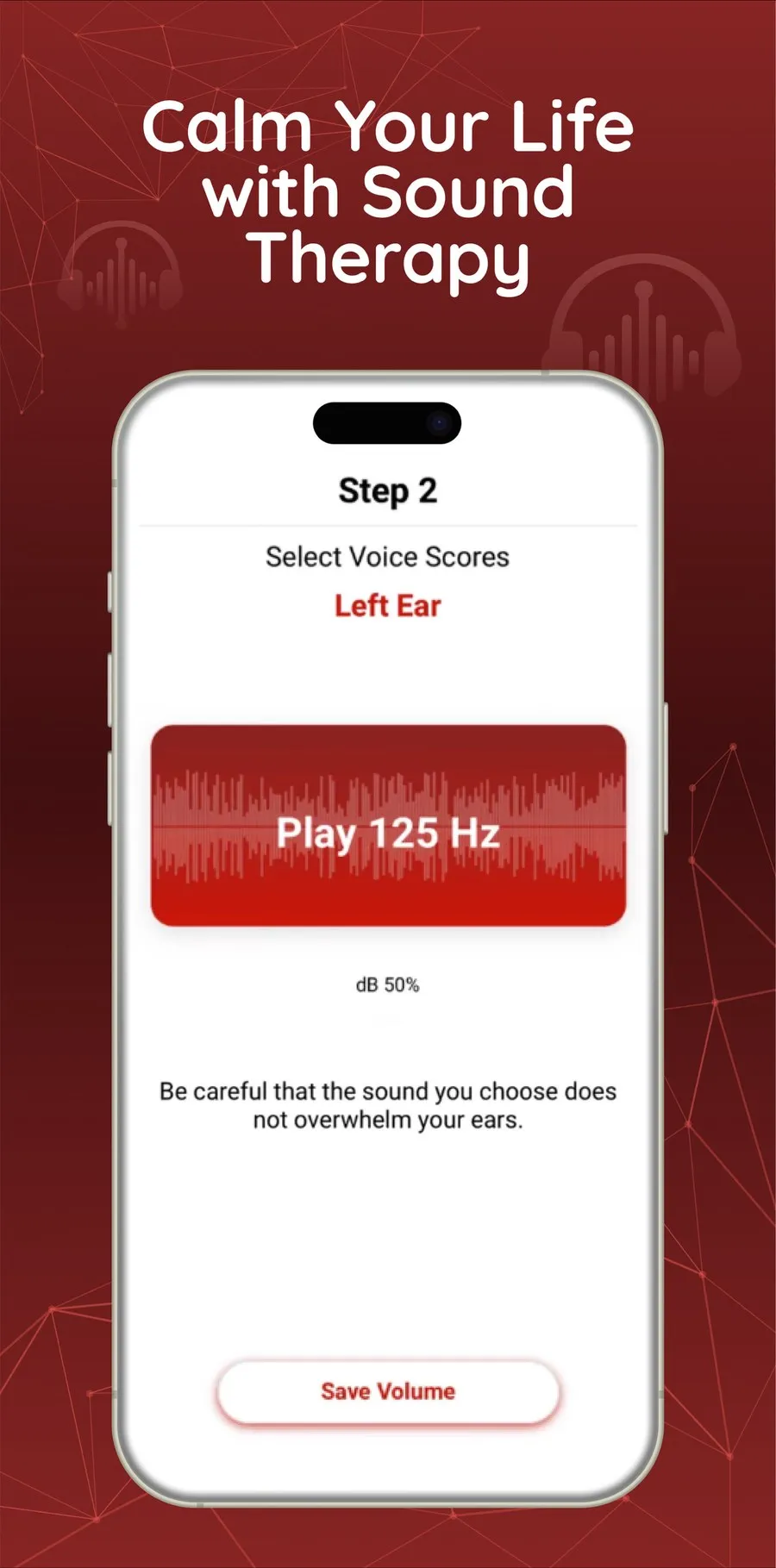
Set a level at 8 frequencies from 125 Hz to 8 kHz, one frequency at a time and separately for your left and right ear. Keep each level just below your tinnitus, so you can still hear the tinnitus under the sound. Then save the volume.
Listen every day
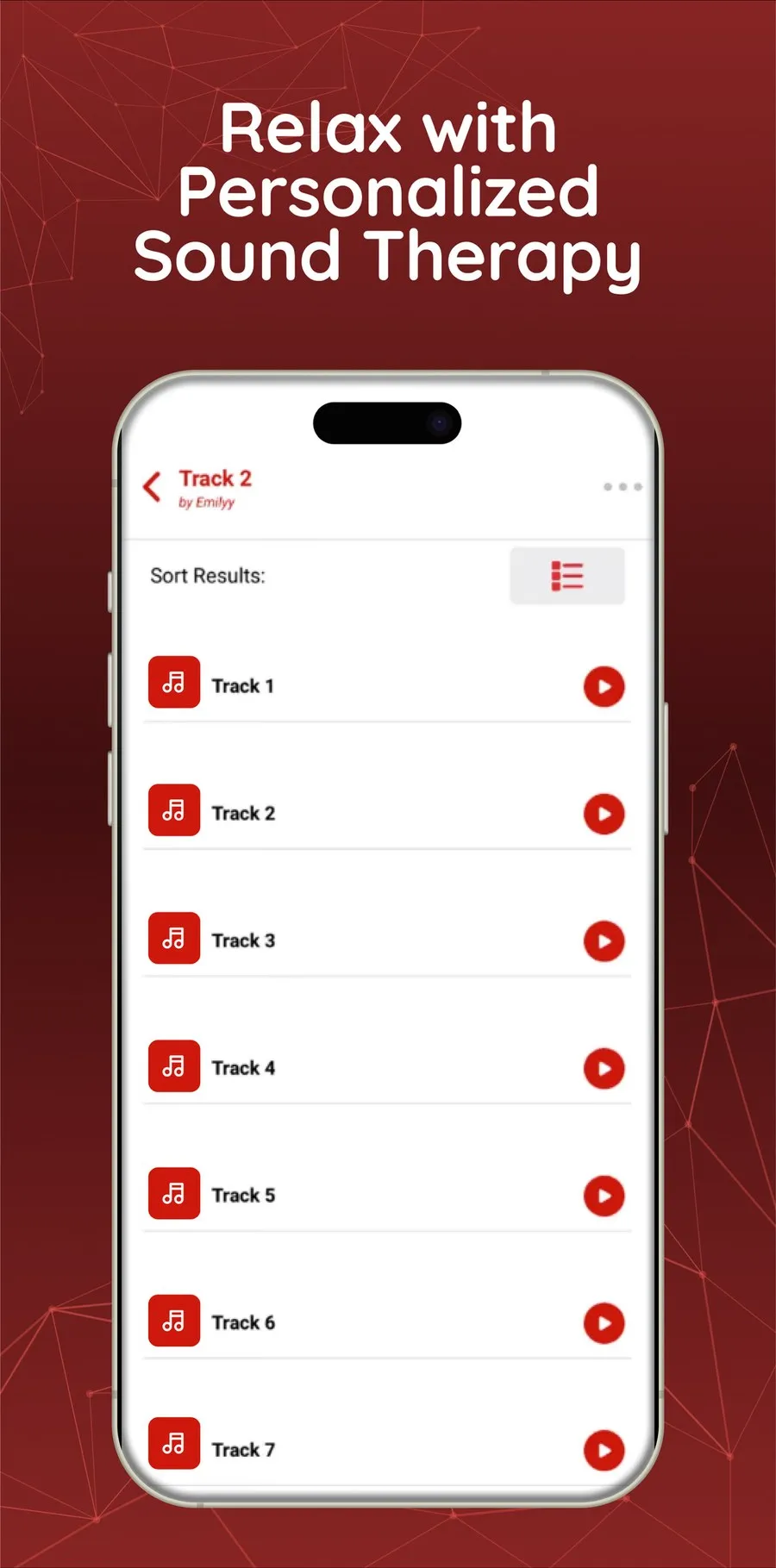
Play your saved sound on its own or under your music, on the same headphones you set it with, for at least an hour a day. Leave your phone volume alone while you listen. It can run while you work, walk or travel.
Keep track of how you are doing
Answer the 25-question survey based on the Tinnitus Handicap Inventory from time to time. Every score is saved, so you can see how tinnitus affects you over weeks and months.
Why the sound sits just below your tinnitus
The goal is not to drown the tinnitus out. Tinnitus UK says sound can help your brain become more used to tinnitus and eventually able to ignore it, which is called habituation, and that habituation is probably best achieved with sound a little quieter than your tinnitus most of the time. It says masking, playing a loud noise that drowns the tinnitus out, does nothing to encourage long-term habituation. The NHS describes tinnitus retraining therapy as using sound therapy to retrain your brain to tune out the tinnitus, and says it is unclear whether it works for everyone. Tinnimizer does not promise results. Read more in our guides: Tinnitus habituation: stages, timeline and what helps and Tinnitus sound therapy: how it works and what research shows.
Get the app
Want to know more first? Read what the app does and does not do, or ask us through the contact page.